
Workshop "Global radiation monitoring network and Xenon's automatic radioactivity measurement system"
A Seminar on Worldwide Radiation Monitoring Network and Automatic Radioxenon Measurement System was jointly organised by the INST of Vietnam Atomic Energy Institute (VINATOM), Phan Le Consultancy Technology and Equipment JSC(Phan Le Company) and a French representative from the Environment S.A Group (ESA) on 23 March 2017 at the INST.
VINATOM Vice President Nguyen Hao Quang; ESA Vice President, Sales and Marketing Director Serge S. Aflalo; representatives from Phan Le Company and the INST staff attended the seminar.
At the beginning of the seminar, Mr. Serge S. Aflalointroduced ESA to all the participants. ESA is a French business group dedicated to instrumentation for the environment such as air and water quality monitoring, continuous emission monitoring, radionuclides monitoring and engine gases analysis. The Group has successfully established a worldwide distribution network in more than 65 countries.
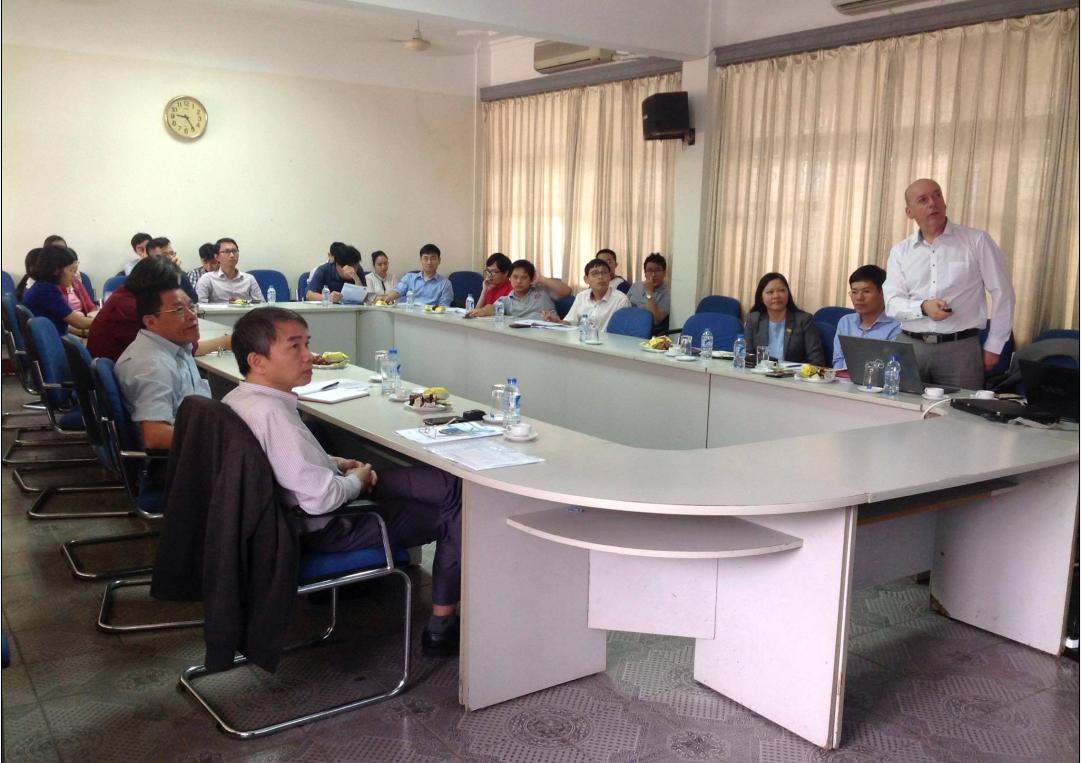
After the introduction of ESA, Mr. Serge S. Aflaloprovided the participants with an overview of the International Monitoring System (IMS), one of the six elements of the CTBTO’s verification regime (CTBTO – Comprehensive Nuclear-Test-Ban Treaty). In order to detect any nuclear explosion conducted on Earth (underground, underwater or in the atmosphere), the IMS uses four main technologies, including: seismic, hydro-acoustic, infrasound and radionuclide monitoring. The IMS consists of 321 monitoring stations and 16 laboratories built in 89 countries around the world. The data acquired from the monitoring stations is transmitted to the International Data Centre (IDC), located at the headquarters of the CTBTO in Vienna, Austria.Among the 321 IMS monitoring stations, 14 stations are equipped with SPALAX radioxenon systems provided by the ESA.
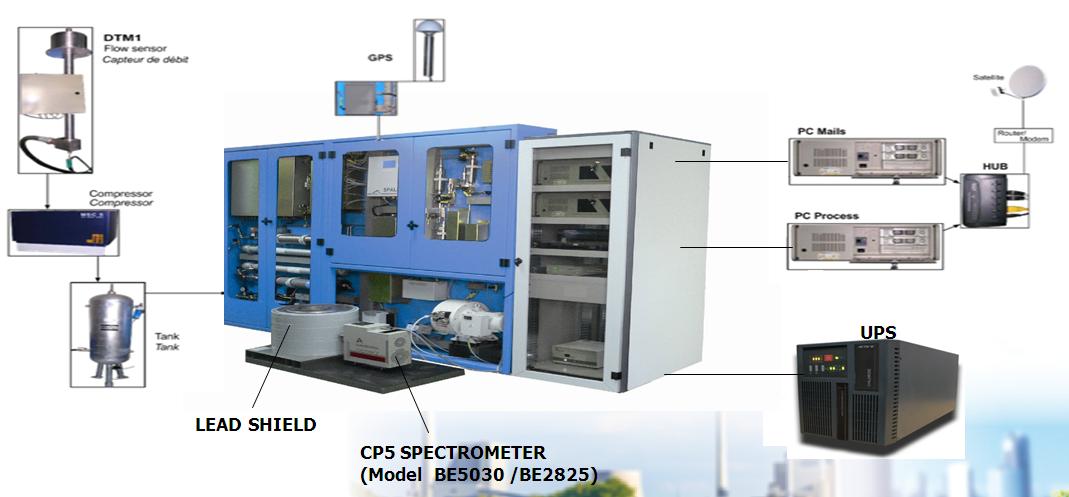
The SPALAX system was then introduced in detail. This equipment can operate 24 hours per day. After sampling and processing, the air samples are analysed using high resolution HPGe gamma spectrometer. The spectra analysis allows detecting the presence of 4 radioactive isotopes of Xenon, releasing from a nuclear atmospheric explosion or a link in the air from a civil nuclear reactor. In principle, all the activities are automatically performed in the following 4 phases: (1) air samples collection, (2) sample processing and preparation, (3) sample quantification, and (4) radioxenon analysis and detection.
All the information shared at the seminar gave the INST participants an adequate understanding of the SPALAX system and the radiation monitoring network across the globe.
INST


.png)